
The Missing Link in Foot Pain: Why Your Big Toe Matters More Than You Think
When people think about foot pain, they often focus on the obvious: tight calves, fallen arches, or the need for better shoes.
But one of the most overlooked—and most important—pieces of the puzzle is the big toe.
Not just how it looks. Not just whether it’s stiff or painful.
But how it moves, how it loads, and how it communicates with your brain.
Your Big Toe Is Part of a Much Bigger System
Your big toe plays a key role in how your body moves forward. To walk efficiently, it needs to bend upward as you push off the ground (about 60°). This helps your foot become stable so you can move forward with ease. But this isn’t just mechanical—it’s also sensory.
Your feet are constantly sending information to your brain about:
where you are in space
how your weight is distributed
whether it feels safe to move forward
And your big toe is a big part of that.
When the Big Toe Isn’t Doing Its Job
If your big toe doesn’t move well—or if you don’t load through it properly—your body adapts.
Over time, this can look like:
shorter, less efficient steps
overuse of the quads and hip flexors
less support from the hamstrings
a forward-shifted posture
more strain through the feet, hips, and low back
There’s also a nervous system piece.
Your body is always asking: “Do I feel supported here?”
If the foot doesn’t provide clear feedback, your system may shift into more protective patterns:
holding tension in the front of the body
avoiding full push-off
moving in a more effortful way
Over time, these patterns can become your default.
It’s Not Just About Stretching
Many approaches focus on the toe itself—stretching it or strengthening the foot. That can help. But it often misses something deeper.
If your body doesn’t feel supported when you load your foot, it won’t fully use that range—even if it’s there.
At Antidote, we look at how the foot connects to the rest of the body—especially the hamstrings, pelvis, and the breath.
Reconnecting the Chain
Instead of isolating the foot, we help the body relearn how to:
feel the ground
use the back of the body for support
move forward without gripping or bracing
Here are two simple places to start - we’ll start by building strength and awareness in the foot, then bring that into how you move your body.
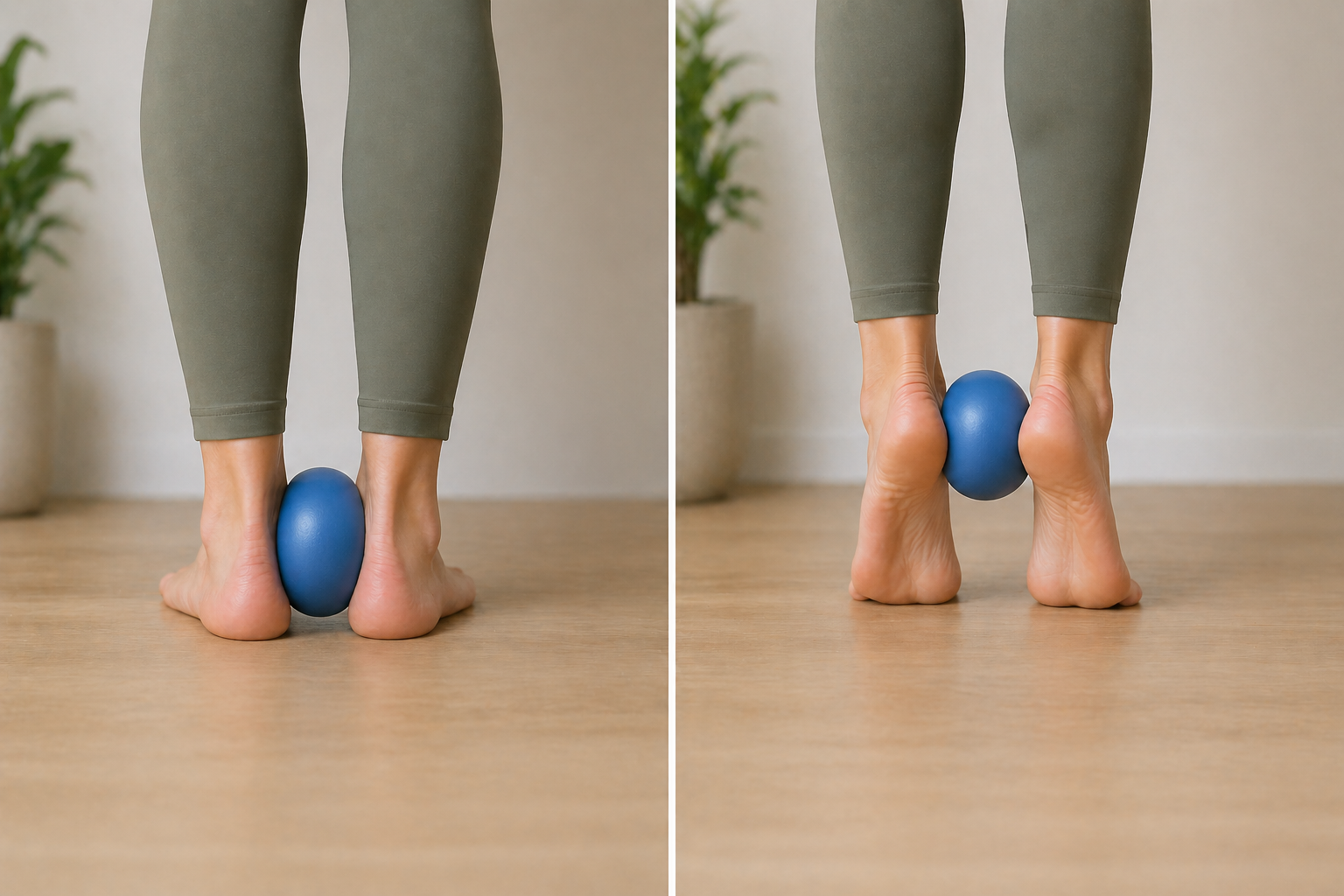
1. Ball Squeeze Rocker
This exercise builds strength through the arch and calf—especially the tibialis posterior—and helps your foot learn how to connect to the ground more effectively.
How to try it:
Stand with a small ball placed between your heels or inner ankles
Gently squeeze the ball to engage your inner lower legs
Keeping that squeeze, slowly lift your heels off the floor
Maintain pressure through the base of the big toe and all toes
Let the toes stay long and relaxed—no gripping or clawing
Hold onto a wall or surface for balance if needed (this is not a balance exercise)
Slowly lower back down
Reps: 8–12 slow, controlled repetitions
What you should feel:
Engagement through the inner arch of the foot
Calf working, especially more deep and medial (inside)
Steady pressure through the big toe without tension in the toes
A sense of lift through the arch rather than collapsing inward
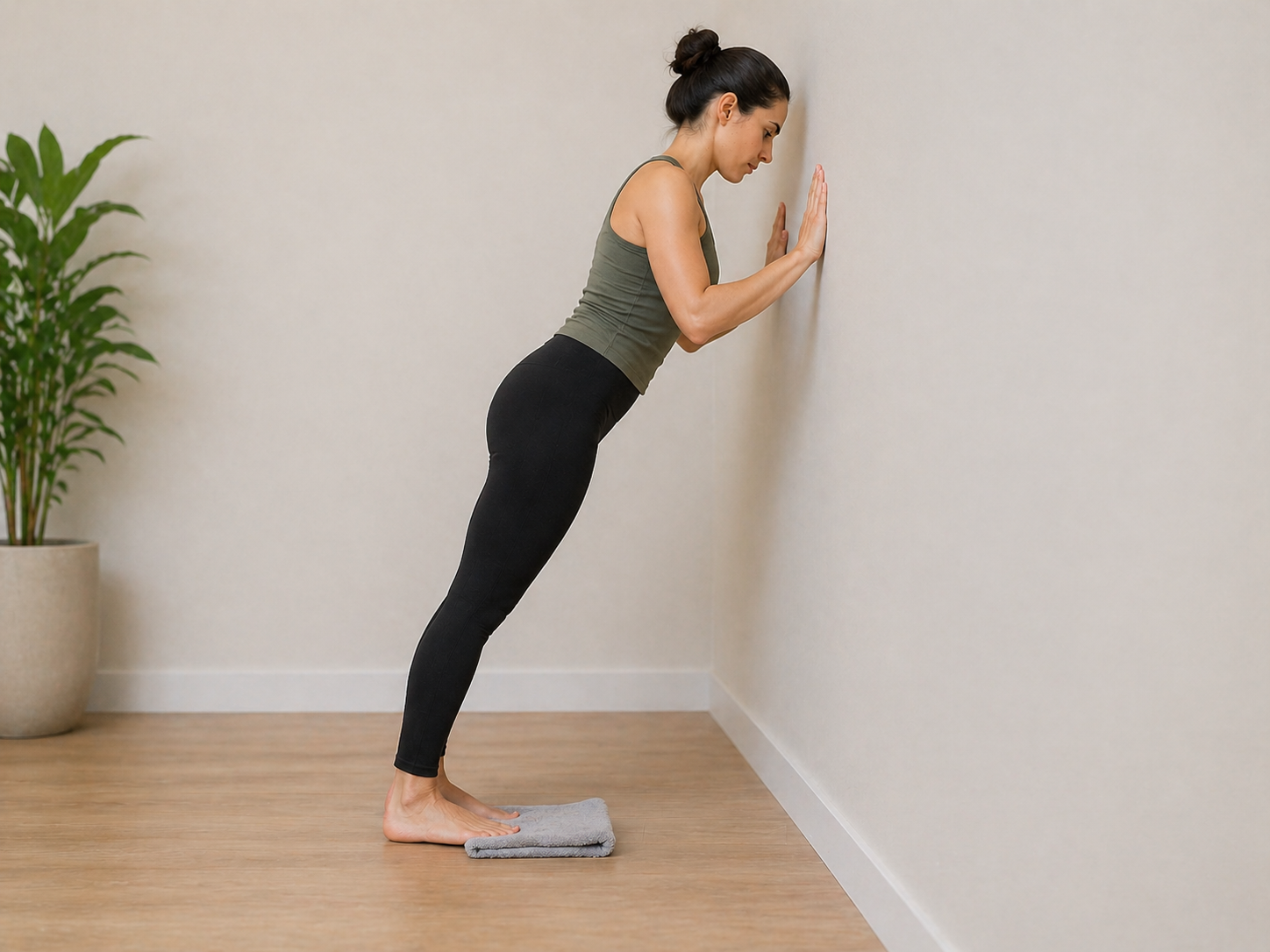
2. Integrate: Ski Jump Position
This brings the same ideas into standing and helps your body use that foot strength as you move forward.
How to try it:
Stand with feet hip-width apart
Place a small towel under your toes (heels stay on the floor)
Shift your weight slightly forward
Keep your knees soft and your hips gently back
Find the edge where your heels want to lift off the floor, but don’t let them!
Press your toes into the towel without gripping
Breathe slowly and hold for 10–20 seconds
6-8 reps
What you should feel:
A steady connection through your feet, your hamstrings supporting you, and less tension through the front of your body..
A Different Way to Think About Foot Health
When you improve how your big toe functions, you’re not just changing your foot. You’re changing how your whole body moves and organizes itself.
This can lead to:
more efficient walking
less strain
better balance
a greater sense of ease in your body
The Takeaway
Your big toe is more than a joint—it’s a connection point between your body, your environment, and your nervous system.
And when that connection is clear and supported, movement becomes easier.
References:
Goldmann JP, Sanno M, Willwacher S, Heinrich K, Brüggemann GP. (2013) The potential of toe flexor muscles to enhance performance.
Hicks, J. H. (1954). The mechanics of the foot II. The plantar aponeurosis and the arch.
Kennedy, P. M., & Inglis, J. T. (2002). Distribution and behaviour of glabrous cutaneous receptors in the human foot sole.
Menz, H. B., et al. (2005). Foot problems, functional impairment, and falls in older people.
Merzenich, M. M., et al. (1984). Somatosensory cortical map changes following digit amputation in adult monkeys
Nix, S., Smith, M., & Vicenzino, B. (2012). Prevalence of hallux valgus in the general population: a systematic review and meta-analysis.
Wolpert, D. M., Ghahramani, Z., & Jordan, M. I. (1995). An internal model for sensorimotor integration.